
For service questions, see garage door repair in Seattle. Confirm the listed ZIP coverage before calling.
Before troubleshooting, keep the opening clear
A closed door that will not respond is frustrating, but its position matters. If it is partly raised, crooked or hanging from a loose cable, keep everyone out of the travel path and stop using the controls. Do not pull the release to see what happens. A door that has lost spring support can move unexpectedly. If a car is trapped, explain that during the call without attempting to lift a visibly damaged door.
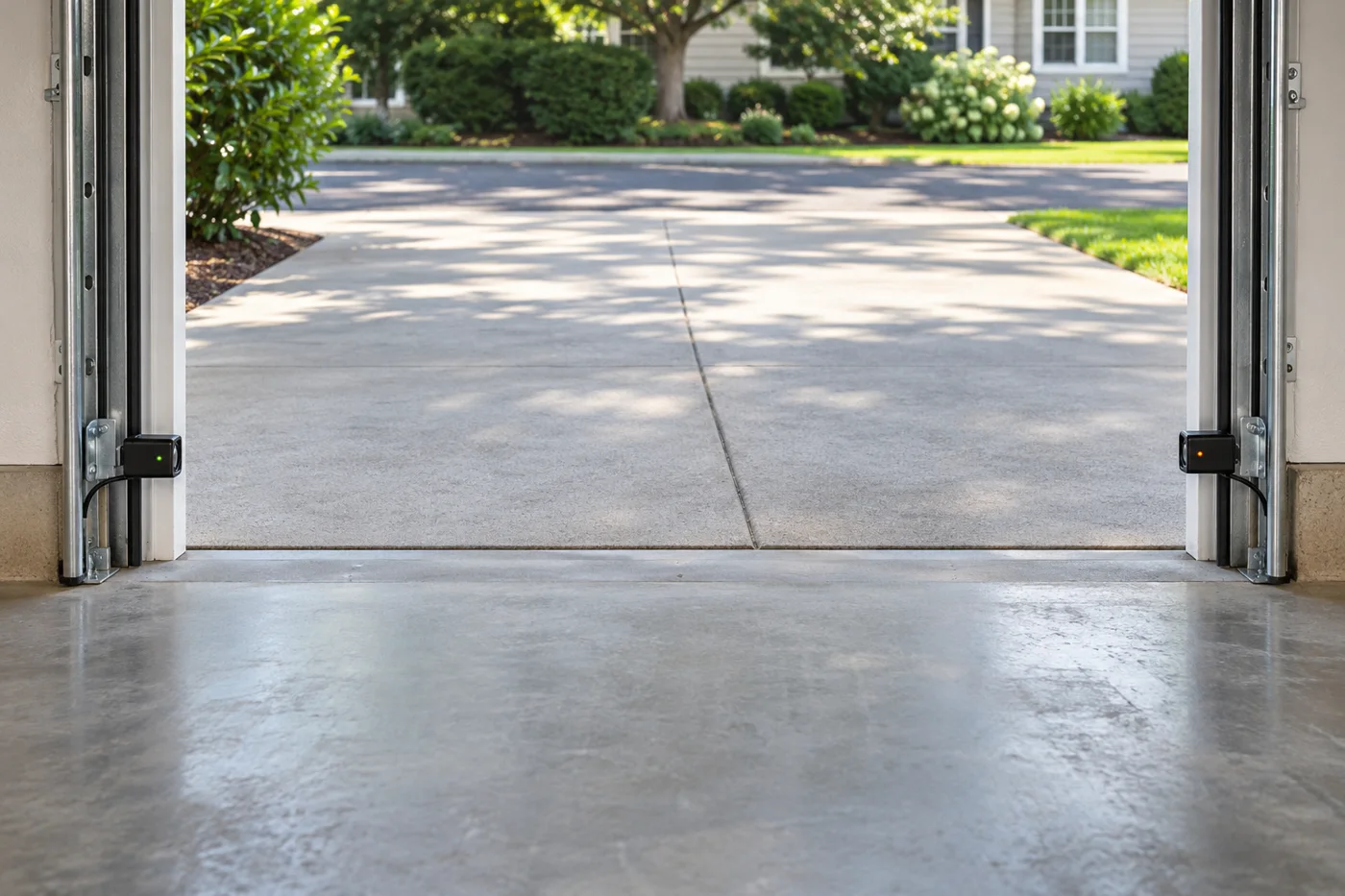
For Seattle homes and properties
Around Seattle’s covered postal areas, wet leaves, shaded approaches and garages beside living space can change the questions worth asking. Describe alley access, moisture at the opening and noise near occupied rooms. Weather context helps the conversation but does not diagnose the fault.
Separate the controls from the mechanism
From a safe place, note whether the wall control works while the remote does not. A remote-only failure may involve its battery, pairing or lock mode; an opener that hums while the door does not move can involve a very different mechanical fault. Check the manufacturer’s instructions for the exact model before changing settings. Avoid repeated cycles, which add stress when the door is obstructed or out of balance.
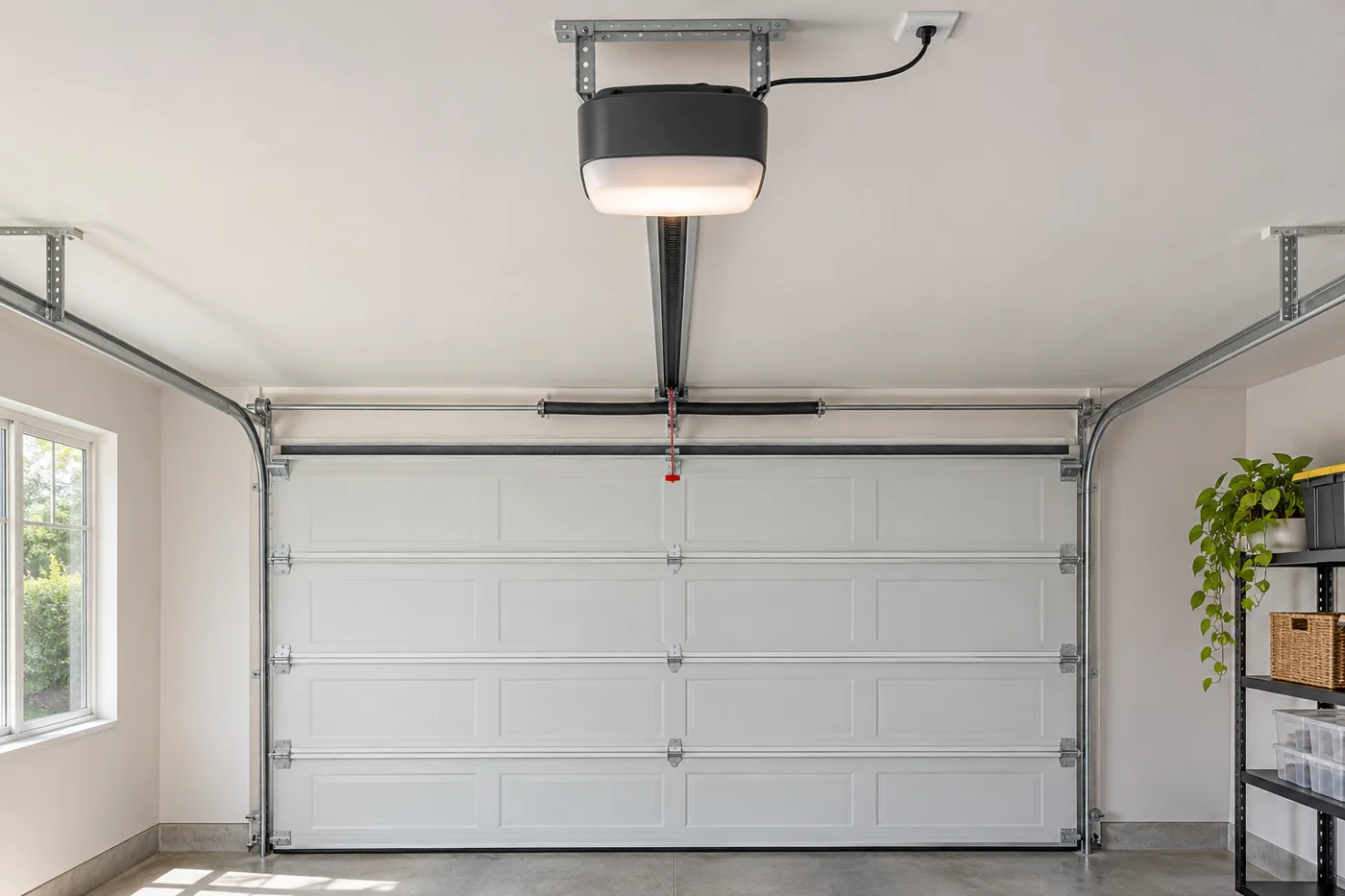
Build a useful description
Record the door position, sound, opener model and whether the problem followed a power loss or an impact. Mention a bang, a visible spring gap or one side lifting first. You do not need to diagnose the part yourself. These observations help distinguish an access-control question from a lifting-system inspection. Keep tools away from springs, drums and bottom fixtures.
What to ask after diagnosis
Ask what caused the failure, which components are affected and how safe operation will be checked. If replacement is suggested, ask why repair is unsuitable and which existing parts are compatible. Before normal use resumes, understand the controls and safety features. A working motor sound by itself does not establish that the complete door system is safe.
A closed door is different from a suspended door
When explaining the problem, make the door position the first detail rather than starting with a guessed part. A fully closed door with an unresponsive remote, a door resting a few inches above the floor and a door leaning in the opening are different situations. If there is another safe entrance, use it rather than walking beneath a suspended door. If the garage is the only route to a vehicle, describe that constraint. Do not climb through a narrow gap or allow someone to hold a damaged door overhead. Access planning belongs in the service conversation, particularly when the lifting system may be compromised.
Keep a short observation log
A useful log can be as simple as: wall control response, remote response, door position, sound and the last normal cycle. Add whether the fault began after a storm, an impact, a power interruption or a long period without use. If the opener displays a diagnostic code, record it from a safe location and keep the model manual nearby. Do not erase codes, reprogram multiple controls or change force settings before noting the original behavior. A sequence of changes can be more useful than a confident but unverified diagnosis. The goal is to communicate observations without taking the door apart.
Before a Seattle-area access call
The covered Seattle postal ZIPs are a defined subset, not an offer across every neighborhood carrying a Seattle mailing address. Give the actual ZIP first, then describe an alley, shared drive or sloping approach if one is involved. If another resident depends on the same garage opening, let them know it should stay unused until the problem is understood. A household door that is partly open needs a different discussion from a business bay in Renton or Kent; building use belongs in the description. A nearby vehicle, narrow driveway or garage with no pedestrian entrance also affects how access can be planned without forcing the damaged system.
Connect the next question
For a heavy or uneven door, read about spring and lifting-system assessment. If only the controls behave differently, explore opener diagnosis. When a new assembly is being considered, the installation guide explains fit and clearance. For a motor upgrade, compare the fit questions in opener installation.
Local considerations: Seattle garage door guidance ↗ Bellevue garage door guidance ↗ . Check each locality’s listed ZIPs; a postal name does not establish complete town coverage.
Related reading: door will not open, repair or replace and seasonal care.
Further reading and safety references
Follow the instructions for your exact door and opener. General context: DASMA safety and maintenance; U.S. Consumer Product Safety Commission: automatic garage door openers. This guide supports recognition and planning; it is not a procedure for work on loaded hardware.